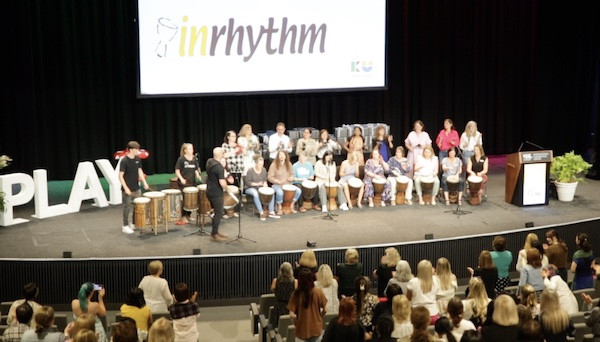
There's a moment that often happens in group rhythm sessions.
It might be in a school hall full of Year 5 students.
Or during a corporate conference where nobody knows each other yet.
Or in a community group where people arrive quietly, carrying the weight of the week with them.
At first, people sit cautiously.
Then a simple rhythm begins.
A pulse.
Nothing complicated. Just a shared beat.
And within minutes, something changes.
People start making eye contact.
They begin listening differently.
The room softens.
Energy lifts.
Laughter appears naturally.
People become present.
Often before anyone has even introduced themselves.
Connection Doesn't Always Begin With WordsModern life places enormous emphasis on verbal communication.
We talk.
We explain.
We analyse.
We present.
Yet many people still feel increasingly disconnected — from themselves, from others, and even from the environments they spend time in every day.
What rhythm-based experiences reveal is that human connection is often built far more quickly through shared participation than through conversation alone.
Especially in groups.
When people engage in rhythm together, they immediately begin responding to something collective:
- timing
- listening
- movement
- attention
- cooperation
- presence
Without needing to "perform socially".
This changes the dynamic entirely.
Rhythm Brings Attention Into The Present MomentOne of the reasons rhythm can feel so grounding is because it engages the body directly.
Unlike purely verbal interaction, rhythm requires:
- listening
- sensory awareness
- timing
- coordinated attention
- physical participation
This naturally draws people into the present moment.
For many people, moments of genuine presence have become surprisingly rare.
Modern life constantly pulls attention outward:
- notifications
- multitasking
- background stress
- endless information
- mental overload
Rhythm interrupts that cycle, even briefly.
People often describe feeling:
- calmer
- lighter
- clearer
- energised
- more connected
Not because anything mystical occurred — but because for a moment, attention became unified rather than fragmented.
People stopped thinking about the experience and simply entered it.
Why Shared Rhythm Builds Trust QuicklyConversation can sometimes create pressure.
People may worry about:
- saying the right thing
- social awkwardness
- hierarchy
- confidence
- fitting in
Rhythm changes the rules.
In a rhythm-based activity, people contribute together immediately regardless of:
- age
- background
- personality
- role
- status
- musical experience
A CEO and a new staff member become part of the same rhythm.
Teachers and students participate side-by-side.
Conference delegates stop observing and start engaging.
The experience becomes collaborative rather than performative.
And importantly:
people begin experiencing each other differently.
Not through labels or roles, but through shared participation.
Presence Is Becoming Increasingly ValuableWe live in a time of constant distraction.
Many people spend very little time fully engaged in what they are doing, or fully attentive to the people around them.
Perhaps this is one reason participatory experiences can feel so refreshing.
Not because they are "entertainment".
But because they create moments where people genuinely arrive.
Attention converges.
People listen.
People participate.
People share something real together.
There is something deeply human about that.
And while rhythm sessions may only last an hour, many participants leave feeling noticeably different afterwards:
- more connected
- more grounded
- more open
- more energised
Sometimes the experience itself becomes a reminder of how restorative genuine presence can feel within everyday life.
This Isn't Just About DrummingWhile drumming is an incredibly accessible and engaging way to experience rhythm, the deeper principle extends well beyond music itself.
Shared rhythmic participation can include:
- body percussion
- movement
- clapping patterns
- call-and-response activities
- collaborative games
- coordinated group exercises
The deeper principle is participation.
Humans connect through doing things together.
Especially experiences that require:
- listening
- cooperation
- awareness
- timing
- collective attention
Why This Matters In Schools, Workplaces & CommunitiesAcross many sectors, people are actively searching for ways to rebuild:
- engagement
- belonging
- wellbeing
- collaboration
- emotional safety
- focus
- social connection
Yet many approaches remain heavily information-based.
Rhythm-based experiences offer something different:
an embodied experience of connection itself.
Not simply talking about teamwork.
Actually experiencing it.
Not simply discussing wellbeing.
Momentarily feeling more grounded and engaged.
Not simply encouraging participation.
Creating the conditions where participation happens naturally.
This is one reason rhythm-based experiences can be so powerful across:
- schools
- workplaces
- conferences
- wellbeing settings
- leadership programs
- community events
The experience meets people directly.
A Return To Shared Human ExperienceLong before modern technology, humans gathered in rhythm:
- ceremonies
- celebrations
- storytelling
- work
- healing
- community gatherings
Across cultures throughout history, rhythm has helped people synchronise attention, emotion and collective experience.
Perhaps part of the growing interest in participatory experiences today reflects something many people are quietly searching for:
a chance to feel fully connected again.
Not virtually.
Not passively.
But directly.
Together.
Final ThoughtsNot every meaningful moment begins with conversation.
Sometimes connection begins with:
listening
participation
shared attention
a simple pulse
a room full of people arriving in the same moment together
And in a world that often feels increasingly distracted and fragmented, those moments may matter more than ever.
Experience Shared Rhythm & Connection With InRhythm
InRhythm facilitates interactive rhythm and drumming experiences across Australia for:
- schools
- conferences
- workplaces
- community groups
- wellbeing programs
- facilitator training
Our programs are designed to create engagement, participation and meaningful shared experiences for groups of all sizes and backgrounds.
Explore our:


Why Rhythm Creates Connection Faster Than Conversation
It might be in a school hall full of Year 5 students.
Or during a corporate conference where nobody knows each other yet.
Or in a community group where people arrive quietly, carrying the weight of the week with them.
At first, people sit cautiously.
Then a simple rhythm begins.
A pulse.
Nothing complicated. Just a shared beat.
And within minutes, something changes.
People start making eye contact.
They begin listening differently.
The room softens.
Energy lifts.
Laughter appears naturally.
People become present.
Often before anyone has even introduced themselves.
Connection Doesn't Always Begin With Words
Modern life places enormous emphasis on verbal communication.
We talk.
We explain.
We analyse.
We present.
Yet many people still feel increasingly disconnected — from themselves, from others, and even from the environments they spend time in every day.
What rhythm-based experiences reveal is that human connection is often built far more quickly through shared participation than through conversation alone.
Especially in groups.
When people engage in rhythm together, they immediately begin responding to something collective:
- timing
- listening
- movement
- attention
- cooperation
- presence
Without needing to "perform socially".This changes the dynamic entirely.
Rhythm Brings Attention Into The Present Moment
One of the reasons rhythm can feel so grounding is because it engages the body directly.
Unlike purely verbal interaction, rhythm requires:
- listening
- sensory awareness
- timing
- coordinated attention
- physical participation
This naturally draws people into the present moment.For many people, moments of genuine presence have become surprisingly rare.
Modern life constantly pulls attention outward:
- notifications
- multitasking
- background stress
- endless information
- mental overload
Rhythm interrupts that cycle, even briefly.People often describe feeling:
- calmer
- lighter
- clearer
- energised
- more connected
Not because anything mystical occurred — but because for a moment, attention became unified rather than fragmented.People stopped thinking about the experience and simply entered it.
Why Shared Rhythm Builds Trust Quickly
Conversation can sometimes create pressure.
People may worry about:
- saying the right thing
- social awkwardness
- hierarchy
- confidence
- fitting in
Rhythm changes the rules.In a rhythm-based activity, people contribute together immediately regardless of:
- age
- background
- personality
- role
- status
- musical experience
A CEO and a new staff member become part of the same rhythm.Teachers and students participate side-by-side.
Conference delegates stop observing and start engaging.
The experience becomes collaborative rather than performative.
And importantly:
people begin experiencing each other differently.
Not through labels or roles, but through shared participation.
Presence Is Becoming Increasingly Valuable
We live in a time of constant distraction.
Many people spend very little time fully engaged in what they are doing, or fully attentive to the people around them.
Perhaps this is one reason participatory experiences can feel so refreshing.
Not because they are "entertainment".
But because they create moments where people genuinely arrive.
Attention converges.
People listen.
People participate.
People share something real together.
There is something deeply human about that.
And while rhythm sessions may only last an hour, many participants leave feeling noticeably different afterwards:
Sometimes the experience itself becomes a reminder of how restorative genuine presence can feel within everyday life.
This Isn't Just About Drumming
While drumming is an incredibly accessible and engaging way to experience rhythm, the deeper principle extends well beyond music itself.
Shared rhythmic participation can include:
- body percussion
- movement
- clapping patterns
- call-and-response activities
- collaborative games
- coordinated group exercises
The deeper principle is participation.Humans connect through doing things together.
Especially experiences that require:
Across many sectors, people are actively searching for ways to rebuild:
- engagement
- belonging
- wellbeing
- collaboration
- emotional safety
- focus
- social connection
Yet many approaches remain heavily information-based.Rhythm-based experiences offer something different:
an embodied experience of connection itself.
Not simply talking about teamwork.
Actually experiencing it.
Not simply discussing wellbeing.
Momentarily feeling more grounded and engaged.
Not simply encouraging participation.
Creating the conditions where participation happens naturally.
This is one reason rhythm-based experiences can be so powerful across:
- schools
- workplaces
- conferences
- wellbeing settings
- leadership programs
- community events
The experience meets people directly.A Return To Shared Human Experience
Long before modern technology, humans gathered in rhythm:
- ceremonies
- celebrations
- storytelling
- work
- healing
- community gatherings
Across cultures throughout history, rhythm has helped people synchronise attention, emotion and collective experience.Perhaps part of the growing interest in participatory experiences today reflects something many people are quietly searching for:
a chance to feel fully connected again.
Not virtually.
Not passively.
But directly.
Together.
Final Thoughts
Sometimes connection begins with:
listening
participation
shared attention
a simple pulse
a room full of people arriving in the same moment together
And in a world that often feels increasingly distracted and fragmented, those moments may matter more than ever.
Experience Shared Rhythm & Connection With InRhythm
InRhythm facilitates interactive rhythm and drumming experiences across Australia for:
- schools
- conferences
- workplaces
- community groups
- wellbeing programs
- facilitator training
Our programs are designed to create engagement, participation and meaningful shared experiences for groups of all sizes and backgrounds.Explore our:
When you subscribe to the blog, we will send you an e-mail when there are new updates on the site so you wouldn't miss them.
About the author
Author's recent posts
Related Posts
Unlock the Power of Group Drumming for Your Next Conference or Team Meeting
Learn Basic Body Percussion with InRhythm: A Beginner's Guide
The Benefits of Team Drumming for Staff Productivity